
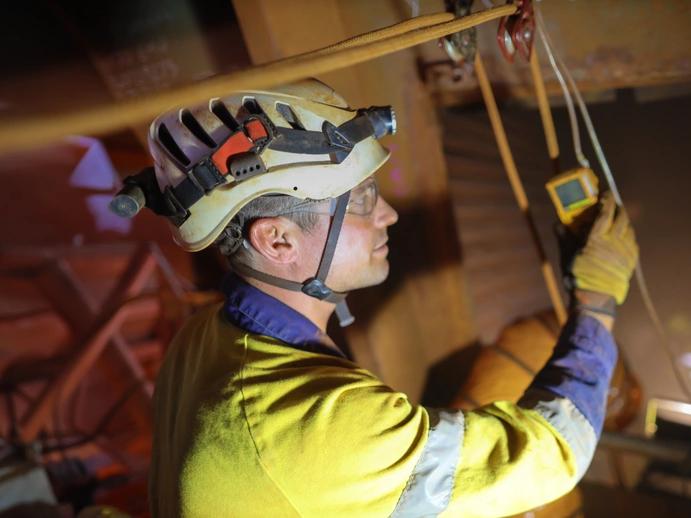
Confined Space and Gas Detection
This course empowers learners with the knowledge and skills needed to navigate confined spaces safely, in compliance with New Zealand’s regulatory standards.
- Duration
- 2 days
- Topic
- Confined Space / Gas Detection
- Next session
- 15 Oct 2026 · 16 dates
At a glance
Course details
Duration: 2 days
Unit Standard:
| Unit # | Name | Level | Credits |
|---|---|---|---|
| 17599 | Plan a confined space entry | 4 | 5 |
| 18426 | Demonstrate knowledge of hazards associated with confined space | 3 | 4 |
| 25510 | Operate an atmospheric testing device to determine a suitable atmosphere exists to work safely | 3 | 4 |
Overview
Confined Space and Gas Detection course overview
Curriculum
What you'll cover
This course is designed for:
- Entrants who need to test and confirm a safe atmosphere before and during confined space work.
- Standby persons and safety observers who need to understand gas monitoring results, controls, and emergency expectations.
- Supervisors, permit receivers, and permit issuers responsible for planning, authorising, or overseeing confined space entry.
- Managers and team leaders who need a practical understanding of permit systems, atmospheric testing, and safe entry requirements.
Our approach
+IMPAC's Confined Space and Gas Detection training approach
Format
Course format and duration
This course is delivered over two days.
Training is available in person nationwide for in-house delivery, with public courses offered in Auckland, Christchurch, and Hamilton.
Upcoming sessions
Public courses – Book now
Want to discuss running Confined Space and Gas Detection at your organisation?
Enquire nowFAQ
Frequently asked questions
Confined Space and Gas Detection training is suited to people involved in confined space entry and atmospheric testing work. That includes entrants, standby persons, supervisors, permit receivers, permit issuers, and anyone responsible for checking whether conditions are safe before or during entry.
Confined Space and Gas Detection training is essential where workers enter confined spaces or work in high-risk environments that rely on atmospheric monitoring to control serious hazards. While legislation does not prescribe a specific training course, workers must be properly trained and competent to carry out this work safely. Many workplaces also require evidence of training before workers can enter permit-controlled environments.
Learners need written and spoken English equivalent to NCEA Level 1 (Year 11) or an IELTS score of 5.5 or higher. This helps ensure learners can follow permit requirements, hazard controls, and emergency procedures during training and assessment. If additional support may be required, please contact our team before enrolment.
The course runs for 2 days, allowing time to cover confined space entry, gas detection, atmospheric testing, and practical workplace application.
Yes, this course includes on-course assessments for NZQA Unit Standards 17599, 18426, and 25510.
This course includes NZQA Unit Standards 17599, 18426, and 25510. Together, these standards cover planning confined space entry, identifying confined space hazards, and using atmospheric testing equipment to confirm safe working conditions.
This course covers confined space entry planning, hazard identification, permit requirements, emergency procedures, and atmospheric testing. Learners also practise using gas detection equipment, interpreting readings for oxygen, flammable atmospheres, and toxic gases, and responding appropriately when conditions are not safe.
IMPAC recommends refresher training at least every two years to maintain practical competence. Some clients or industry requirements may require more frequent refresher training.
No. NZQA unit standards remain on a learner’s Record of Achievement and do not expire. However, refresher training is still important to help learners maintain safe confined space entry and gas detection practices as equipment, hazards, and site conditions change.
Yes, this course is available as both a public course and for in-house delivery. Public dates suit individuals or small groups, while in-house training can help organisations train teams carrying out the same confined space entry and gas detection work.
Please bring the following to training:
- Closed footwear
- A driver’s licence or another form of photo identification
For public face-to-face courses, morning tea and lunch are provided. If you have dietary requirements such as allergies, vegan, or gluten-free needs, please contact IMPAC at training@impac.co.nz at least two working days before training. Please note that dietary preferences cannot be accommodated.
Pricing depends on the delivery method.
In-house: $5300 + GST for up to 12 persons OR $5800 + GST for up to 14 persons.
Public (face-to-face): $530 + GST per person.
Continue learning
Further study options
If you’re continuing your learning journey in health and safety, this course can contribute towards IMPAC’s Certificate in Applied Workplace Health and Safety Practices (Level 3), which leads to the New Zealand Certificate in Workplace Health and Safety Practice (Level 3).
This course is a elective module within the programme, allowing you to build on your existing training while working towards a recognised qualification over time. Browse all Confined Space / Gas Detection training courses.
This programme is approved by the New Zealand Qualifications Authority under section 439 of the Education and Training Act 2020, and Impac Services Limited is accredited to provide it under section 441 of the Education and Training Act.
What's next
Next steps
More courses
You might also like
 Refresher course
Confined Space and Gas Detection Refresher
This training programme refreshes learners’ knowledge and skills needed to navigate confined spaces safely, in compliance with New Zealand’s regulatory standards.

Safety Observer
This course equips learners with the knowledge and skills to effectively perform the role of a Safety Observer (SO) in hazardous environments.
Permit Receiver
This course provides comprehensive training of Permit Receiver protocols and procedures.